
The World Cup Final is Set: Spain vs. Argentina

The stage is officially set for the biggest spectacle in sports history. This Sunday, July 19, 2026 (Monday morning, July 20 at 3:00 AM local time), the iconic New York New Jersey Stadium will host the ultimate crowning achievement in international football: the 2026 World Cup Final. In what is being hailed as a dream matchup by fans and analysts worldwide, the reigning European champions, Spain, will cross swords with the defending World Cup and South American champions, Argentina.
This isn’t just a routine tournament conclusion; it is a historic alignment of footballing excellence. For the first time since the introduction of the official FIFA World Ranking system in 1992, the top two teams in the world will face off directly in the World Cup Final (with Argentina sitting at number one and Spain at number two). Furthermore, it marks the first time that two reigning continental champions will clash for the ultimate trophy. As the footballing universe shifts its gaze toward the Meadowlands, here is an in-depth, tactical preview of this monumental collision.
The Road to New York New Jersey: How the Finalists Earned Their Spots
Navigating the first-ever expanded 48-team tournament layout was a logistical and physical test of historic proportions. With an extra knockout stage inserted into the brackets, the two finalists had to showcase remarkable resilience, tactical depth, and peak physical conditioning to survive the 104-match gauntlet.
Spain’s Masterclass in Control and Precision
Spain entered the tournament as one of the heavy favorites following their dominant Euro victory, and they have done absolutely nothing to diminish that reputation. Under the calculated leadership of Luis de la Fuente, La Roja has put on a clinic in possession-based control balanced with modern, explosive verticality.
Spain's Knockout Phase Path:
Round of 32:   Spain 3–0 Austria
Round of 16:   Spain 1–0 Portugal
Quarter-Final: Spain 2–1 Belgium
Semi-Final:    Spain 2–0 France

Spain’s progression through the knockout stages felt inevitable. After breezing past Austria and surviving an intense Iberian derby against Portugal, they overcame a robust Belgian side in the quarter-finals. The crown jewel of their tournament run arrived in the semi-finals against France. Spain put together a breathtaking 2-0 masterclass, completely strangling the French midfield and rendering their attack entirely toothless. They enter the final having conceded remarkably few chances, buoyed by the flawless distribution of Rodri and the defensive solidity anchored by Marc Cucurella.
Argentina’s Emotional, Comeback-Driven Crusade
If Spain’s journey has been an exhibition of mathematical logic and execution, Argentina’s path to the World Cup Final has been pure, unadulterated cinematic drama. La Albiceleste has ridden a tidal wave of collective emotion, tactical grit, and late-game heroics to secure their chance at defending the crown.
Argentina's Knockout Phase Path:
Round of 32:   Argentina 3–2 Cabo Verde (A.E.T.)
Round of 16:   Argentina 3–2 Egypt
Quarter-Final: Argentina 3–1 Switzerland (A.E.T.)
Semi-Final:    Argentina 2–1 England
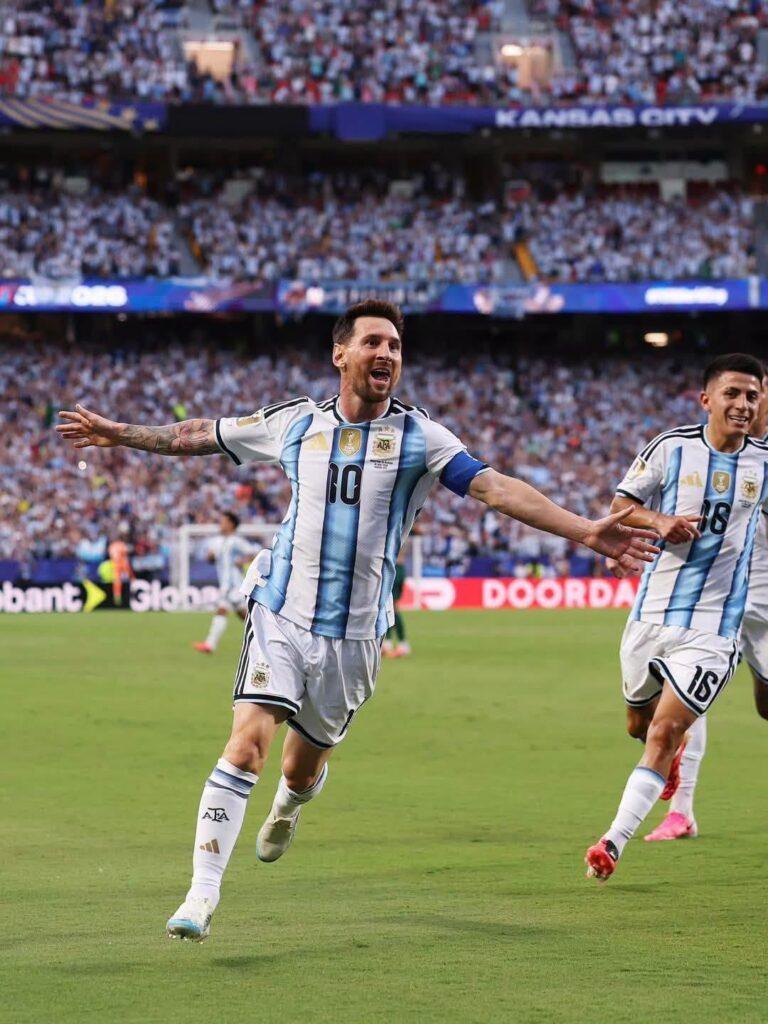
Lionel Scaloni’s men have been pushed to the absolute absolute limit. They needed extra time to dispatch a highly resilient Cabo Verde in the Round of 32 and were forced into a high-scoring shootout of a match against Egypt. Following another grueling extra-time battle against Switzerland, their semi-final clash against England in Atlanta became an instant classic. Trailing 1-0 deep into the second half after an Anthony Gordon goal, Argentina engineered a miraculous comeback. An 85th-minute strike by Enzo Fernández leveled the playing field, setting the stage for Lautaro Martínez to turn the stadium upside down with a clinical 92nd-minute winner.
Tactical Breakdown: Where the World Cup Final Will Be Won or Lost
This final represents a compelling clash of footballing philosophies. Understanding how these two structural setups interact is crucial to identifying where the decisive blows will be landed on Sunday.
         SPAIN (4-3-3)                         ARGENTINA (4-4-2 / 4-3-3)

          Oyarzabal                               Martínez      Messi
     Yamal         Williams
                                                   Mac Allister   De Paul
        Olmo      Pedri                                 Fernández
            Rodri
                                              Acuña   Romero   Otamendi   Molina
  Cucurella  Laporte  Le Normand  Carvajal
                                                        E. Martínez
               Unai Simón
1. The Midfield Engine Room: Rodri vs. Enzo Fernández
The absolute focal point of this entire tactical battle rests in the center circle. Spain’s system relies entirely on Rodri acting as the structural anchor. He dictates the tempo, stops counter-attacks before they start, and recycles possession flawlessly. If Argentina allows him time and space to lift his head, he will pin La Albiceleste into their own defensive third.
To counteract this, Lionel Scaloni will lean heavily on Enzo Fernández and the industrious Rodrigo De Paul. Argentina’s midfield must execute an intense, highly coordinated pressing trigger to disrupt Rodri’s rhythm. If Enzo can win the ball in high areas and instantly feed transition passes to the forward line, Spain’s high defensive line could find itself deeply exposed.
2. The Wings of Fire: Combating Spain’s Youthful Extravagance
One of Spain’s biggest structural advantages in this tournament has been their dynamic width. With Lamine Yamal and Nico Williams stretching opposing backlines, Spain forces defenses to expand, creating massive pockets of space in the half-spaces for advanced midfielders to exploit.
Argentina’s full-backs, likely Nahuel Molina and Marcos Acuña, face the daunting task of containing these wingers without constantly needing central cover. If Cristian Romero or Nicolás Otamendi are forced to step out wide to assist their full-backs, Lautaro Martínez and Mikel Oyarzabal will find ample real estate inside the penalty box.
3. The Messi Factor and Low-Block Resiliency
Even at this stage of his legendary career, Lionel Messi remains the most terrifying structural anomaly in world football. He operates in the spaces between lines, waiting for the precise psychological moment to split a defense open. Spain will likely refuse to assign a hard man-marker to Messi; instead, they will rely on Rodri and the central defenders dropping into a compact zone to deny him passing lanes.
However, if Argentina utilizes a mid-to-low defensive block—a tactic they used brilliantly to frustrate opponents in previous knockout rounds—they can invite Spain forward, compress the space behind their own box, and look to launch rapid counter-attacks through Messi’s vision and Lautaro’s explosive diagonal runs.
Historical Stakes of World Cup Final: A Night of Immortality
The narrative weight hovering over the 2026 World Cup Final is immense, with both nations standing on the precipice of distinct historical milestones.
- Argentina’s Bid for a Quadruple Crown: Having captured the 2021 Copa América, the 2022 World Cup, and the 2024 Copa América, Argentina is attempting to accomplish something no senior men’s international team has ever achieved: winning four consecutive major international tournaments. A victory would also secure their fourth star, pulling them clear of Germany and matching Italy’s historical tally.
- Spain’s Quest for a Second Star: Since their golden generation captured the trophy in South Africa back in 2010, Spain has craved a return to the absolute pinnacle of global football. Winning the 2026 edition would firmly establish this current generation, under Luis de la Fuente, as a legendary dynasty in their own right.
- The Head-to-Head Paradox: Historically, these two powerhouses have shared a remarkably even rivalry. In their 14 previous meetings dating back to 1952, both sides have won exactly six matches, with two draws splitting the difference. Their only prior meeting on the World Cup stage came all the way back in 1966, where Argentina walked away with a 2-1 victory.
The Grand Spectacle Beyond the Pitch
FIFA is pulling out all the stops to ensure the 2026 World Cup Final matches its billing as the most inclusive and massive entertainment event in modern memory. For the first time in tournament history, fans inside the stadium and watching around the globe will witness a massive, Super Bowl-style halftime show.
Production spearheaded by Global Citizen and under the artistic direction of Coldplay’s Chris Martin will feature a star-studded performance medley from global icons including Madonna, Justin Bieber, Shakira, and BTS. To accommodate the massive production scale, the traditional halftime interval will be extended up to 30 minutes, adding an entirely new layer of physical management for the coaching staffs as they try to keep their players warm and tactically focused.
Furthermore, the pre-match closing ceremonies will feature high-octane appearances from Post Malone and Robbie Williams, culminating in a special rendition of the United States national anthem delivered by Jennifer Hudson. With high-profile dignitaries, global celebrities, and heads of state—including US President Donald Trump—confirmed to be in attendance, the atmosphere inside the 82,500-capacity venue will be absolutely electric.
Final Prediction of World Cup Final: Who Lifts the Gold?
Predicting a match of this caliber is an exercise in splitting hairs. Opta’s supercomputer models lean slightly toward the European champions, handing Spain a 45.1% probability of winning in regulation time compared to Argentina’s 29.4%, with a 25.4% chance of the match heading into the high-stakes pressure of extra time or a penalty shootout.
Spain possesses the structural discipline and cohesive team framework to dominate long stretches of the ball. They will likely control the tempo early on and search for an opening goal through their electric wing play. However, games of this magnitude are rarely decided by statistics alone; they are decided by moments of individual genius, psychological fortitude, and sheer force of will.
Argentina has proven time and again over the last four years that they thrive when their backs are against the wall. They possess a unique, intangible tournament DNA that allows them to absorb punishing waves of pressure and strike back with lethal efficiency. If Argentina can disrupt Spain’s midfield pivot early on and keep the scoreline tight going into the final half-hour, their emotional momentum and big-game experience might just carry them over the line to secure back-to-back world titles.
Predicted Score: Argentina 2–1 Spain (After Extra Time)
No matter who walks away victorious on Sunday night, the 2026 showpiece is guaranteed to deliver an unforgettable night of high-stakes, world-class football. Make sure you don’t miss a single second of the pre-match analysis, tactical adjustments, and post-match celebrations. For the latest soccer news, breaking transfer updates, match breakdowns, and exclusive highlight videos, head over to soccersport.club to stay completely ahead of the game!